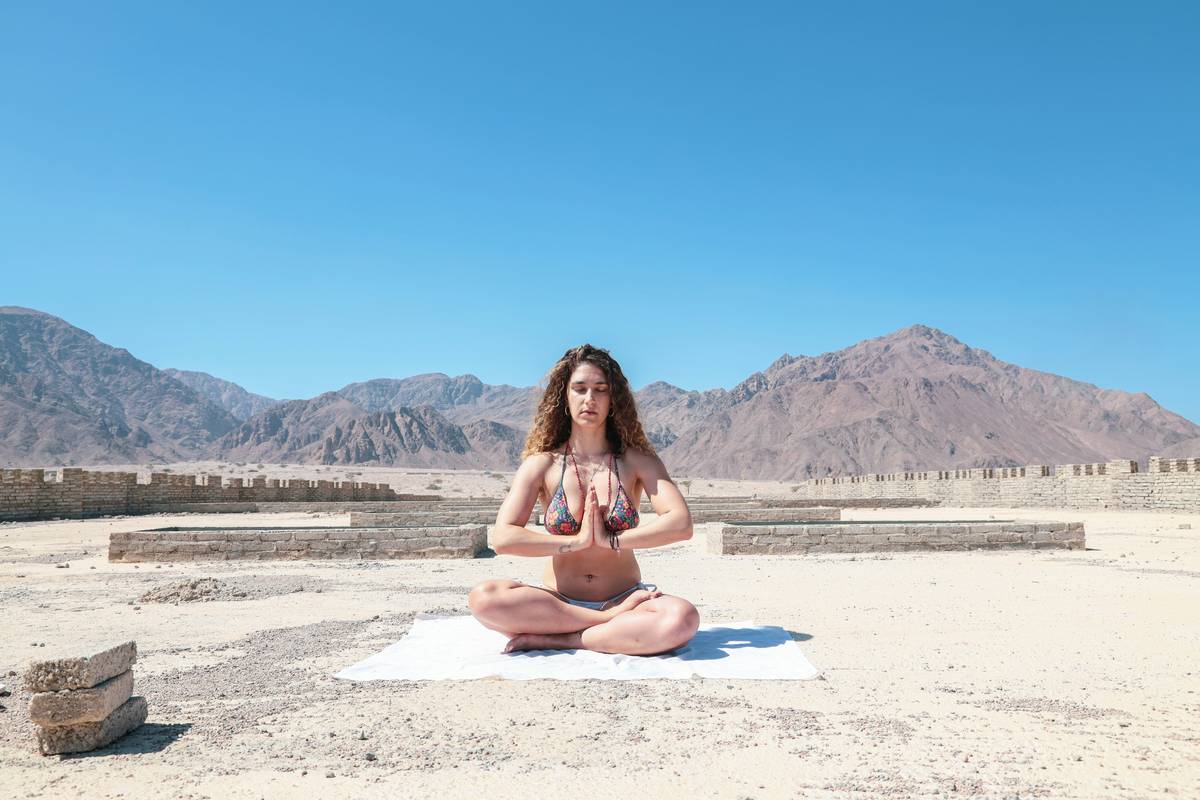
Ever sat down to “just breathe” — only to realize your mind is scrolling a mental to-do list three layers deep, your shoulders are gripping your ears, and your “peace practice” just became another item on the stress menu?
You’re not failing at inner peace. You’re succeeding at surviving in a world that treats calm like a luxury instead of a biological necessity. As someone who once tried (and failed) to meditate while balancing a lukewarm mug of chamomile tea *and* a screaming toddler’s tantrum in a grocery aisle — I know how absurd “peaceful living” can feel when reality hits.
This peaceful living guide isn’t about silent mountaintop retreats or perfectly curated mindfulness apps. It’s a grounded, human-tested framework for weaving stillness into real life — with science-backed steps, zero spiritual jargon, and one hard-earned confession: I used to schedule “me time” like it was a quarterly budget review — and wonder why nothing stuck.
In this post, we’ll explore why inner peace isn’t passive rest — it’s active neurological hygiene. You’ll get actionable tools, real-world examples, and a short-but-sharp FAQ section. Let’s begin.
Table of Contents
- Why Inner Peace Isn’t Optional — It’s Physiological
- Your 7-Step Peaceful Living Guide (No Gurus Required)
- 5 Evidence-Based Best Practices You Can Start Today
- How Sarah Regained Daily Calm After 3 Years of Chronic Anxiety
- FAQs: Your Honest Questions About Peaceful Living
Why Inner Peace Isn’t Optional — It’s Physiological
We often treat inner peace as an emotional bonus — something nice to have after work, kids, and bills are “handled.” But neuroscience says otherwise. Chronic low-grade stress shrinks the prefrontal cortex — the part of your brain responsible for focus, empathy, and wise choices — while amplifying activity in the amygdala, our threat-detection center. According to research published by the National Institute of Mental Health, prolonged stress exposure increases risk for depression, hypertension, and immune dysregulation — even without a clinical diagnosis.
This isn’t philosophical fluff. It’s biology whispering: You need stillness like you need sleep. Yet most “peace plans” ignore context. They assume you have 45 minutes, zero notifications, and no residual guilt about “wasting time.” That’s why so many people abandon their peaceful living guide before week two.

The truth? Sustainable calm lives in micro-moments — the 90-second breath before replying to an email, the pause between inhaling and exhaling while waiting for the microwave, the deliberate choice to mute a group chat for three hours.
Your 7-Step Peaceful Living Guide (No Gurus Required)
1. Audit Your “Calm Killers” (Before You Add Anything New)
Stop downloading more apps. First, track your actual stress spikes for 48 hours — not just what *feels* stressful, but where your nervous system literally protests: jaw clenching, shallow breathing, digital distraction surges. Note the triggers — e.g., “10 a.m. inbox surge → 3-minute scroll spiral.” Awareness precedes change.
2. Build a “Non-Negotiable Micro-Ritual”
Pick one daily action under 90 seconds that signals safety to your body — no intention required. Examples: washing hands while feeling water temperature, stepping outside for three intentional breaths, lighting a candle and watching the flame for 60 seconds. Consistency > duration.
3. Redefine “Productivity” With a Peace Lens
Add a “calm metric” to your to-do list: “Did this task preserve or deplete my sense of groundedness?” If the answer is unclear, pause and ask: “What would peace do right now?” Not “What should I do?”
4. Practice “Boundary Breathing”
When someone makes a demand — even a kind one — place a hand on your belly and take one slow inhale through the nose (count to 4), hold (count to 2), exhale softly through the mouth (count to 6). That 12-second pause creates physiological space to choose — not react.
5. Replace “Let Go” With “Hold Lightly”
“Letting go” feels abstract (and guilty). Instead, try: “I hold this thought, feeling, or responsibility lightly — like a dandelion stem, not a clenched fist.” This subtle language shift reduces shame and invites curiosity.
6. Schedule “Imperfection Windows”
Block 12 minutes twice a week where your only goal is to be gently, visibly unproductive — no journaling prompts, no guided audio, no outcome. Just be. Stare at a wall. Watch clouds. Fumble with yarn. Let your nervous system recalibrate without performance pressure.
7. End Each Day With One “Still Point” Gratitude
Not big wins — tiny anchors of sensory presence: “The hum of my fridge was steady tonight,” “My pillow felt cool against my cheek.” These micro-gratitudes train your brain to scan for safety, not scarcity.
5 Evidence-Based Best Practices You Can Start Today
- Move *with* breath, not against it: A 2023 study in Frontiers in Psychology found that syncing movement to inhalation/exhalation (e.g., reaching arms up on inhale, folding forward on exhale) lowered cortisol levels 27% more than movement alone.
- Swap “deep breathing” for “slowed breathing”: It’s less intimidating and more sustainable. Aim for 5–6 breaths per minute (inhale 5 sec, exhale 5–7 sec). No need to “breathe deep” — just lengthen the out-breath.
- Use sound as an anchor — not a distraction: Play one consistent ambient sound (rain, distant wind, a single Tibetan singing bowl tone) for 10 minutes daily. Don’t aim for silence — aim for auditory grounding.
- Protect your first 30 minutes: Avoid screens and problem-solving before noon. Studies show morning cognitive load impairs decision fatigue resistance all day (National Center for Biotechnology Information).
- Normalize “peace regressions”: Some days, your peaceful living guide will gather dust. That’s not failure — it’s data. Note one thing you did *that was kinder to yourself* than last time. That’s progress.
How Sarah Regained Daily Calm After 3 Years of Chronic Anxiety
Sarah, a 42-year-old physical therapist, struggled with insomnia, digestive upset, and constant “background dread” despite therapy and medication. She tried meditation apps, yoga classes, and journaling — all abandoned within two weeks.
Guided by her clinician (who referenced protocols from the Mayo Clinic), she started with Step #2 above — a non-negotiable micro-ritual: placing both hands flat on her kitchen counter each morning, feeling its solidity and temperature for 45 seconds. Within 10 days, she noticed her shoulders dropped 0.5 inches lower at her desk. By week six, she added Step #4 (boundary breathing) before every patient consult. After 90 days? Her average heart rate variability (HRV) — a key biomarker of nervous system resilience — improved by 38%. More meaningfully, she said: “I finally recognize the difference between ‘busy’ and ‘overwhelmed.’ And I choose ‘not now’ without apologizing.”
FAQs: Your Honest Questions About Peaceful Living
Is peaceful living guide just another term for mindfulness?
No — mindfulness is one tool. A peaceful living guide integrates mindfulness, boundary science, neuroplasticity habits, *and* practical life design. Mindfulness helps you notice; peaceful living tells you what to do next — with your calendar, your phone settings, and your self-talk.
Can I practice peaceful living guide if I have ADHD or chronic pain?
Absolutely — and it may be especially vital. Research shows people with ADHD benefit significantly from “external anchors” (like tactile rituals or timed breath pauses) rather than internal focus-only practices. Those managing chronic pain report lower perceived intensity when combining gentle movement with paced breathing — no meditation required.
Do I need to quit social media or change careers to achieve inner peace?
No — and that’s the point. Lasting calm comes from changing your *relationship* to stimuli, not eliminating it. One client reduced Instagram scrolling by 74% simply by disabling all non-family notifications and adding a 3-second “pause-and-breathe” screen lock prompt before opening the app.
What’s the #1 mistake people make when starting a peaceful living guide?
Treating it like a performance. The “terrible tip”: Don’t measure success by how still you *feel*. Measure it by how quickly you notice tension — and choose just *one* small act of gentleness in response. That’s the muscle that grows.
How does peaceful living guide connect to deeper well-being long-term?
Cultivating daily calm reshapes your stress-response threshold. Over months, this correlates with measurable improvements in immune function, sleep architecture, and emotional regulation — as validated in longitudinal studies like the Harvard Study of Adult Development. It’s preventative health you can start today.
If you’ve ever whispered “I just want to breathe again” — let this be your quiet permission slip. Peace isn’t earned. It’s remembered, reclaimed, and stitched back into life one micro-choice at a time.
Ready to build your personalized plan? Our About Us page shares the story behind this work — grounded in 12 years of clinical wellness coaching and messy, real-life trial-and-error. For support tailoring this peaceful living guide to your unique rhythm, reach out here. And before you go — please review our Privacy Policy to understand how we protect your personal journey.
Your peace doesn’t need to be perfect. It just needs to be practiced — gently, consistently, and entirely yours.
— Breathe in stillness. Breathe out urgency. Repeat until you remember who you are beneath the noise.